When two-time All-NBA honoree and 2016 NBA champion Kevin Love first opened up publicly about his mental health struggles in 2018, he already had a resume that most basketball players could only dream of. However, the Oregon native had yet to do his most important work.
Love had a panic attack while playing for the Cleveland Cavaliers against the Atlanta Hawks on Nov. 5, 2017, which he revealed in a Players’ Tribune article the following March. In the piece, entitled “Everyone Is Going Through Something,” he explained that the incident made him realize that sharing personal difficulties and not keeping emotions inside are essential for leading a healthy life. Since then, he’s made that message a central part of his platform.
Love started the Kevin Love Fund in 2018, an organization dedicated to helping people improve their mental health. The former UCLA Bruin also routinely discusses his personal mental health journey, including in another Players’ Tribune piece from September 2020 entitled “To Anyone Going Through It.” A more recent example is his appearance on the show “No Magic Pill with Blake Mycoskie” this past May. Mycoskie is an entrepreneur who built the brand TOMS Shoes.
On the episode, they discussed topics like how DeMar DeRozan inspired Love to open up about depression, the evolution of mental health discussions in popular culture and how career success shouldn’t define self-worth. Love further discussed his mental health journey in an email interview with ClutchPoints on Monday.
Kevin Love Q&A
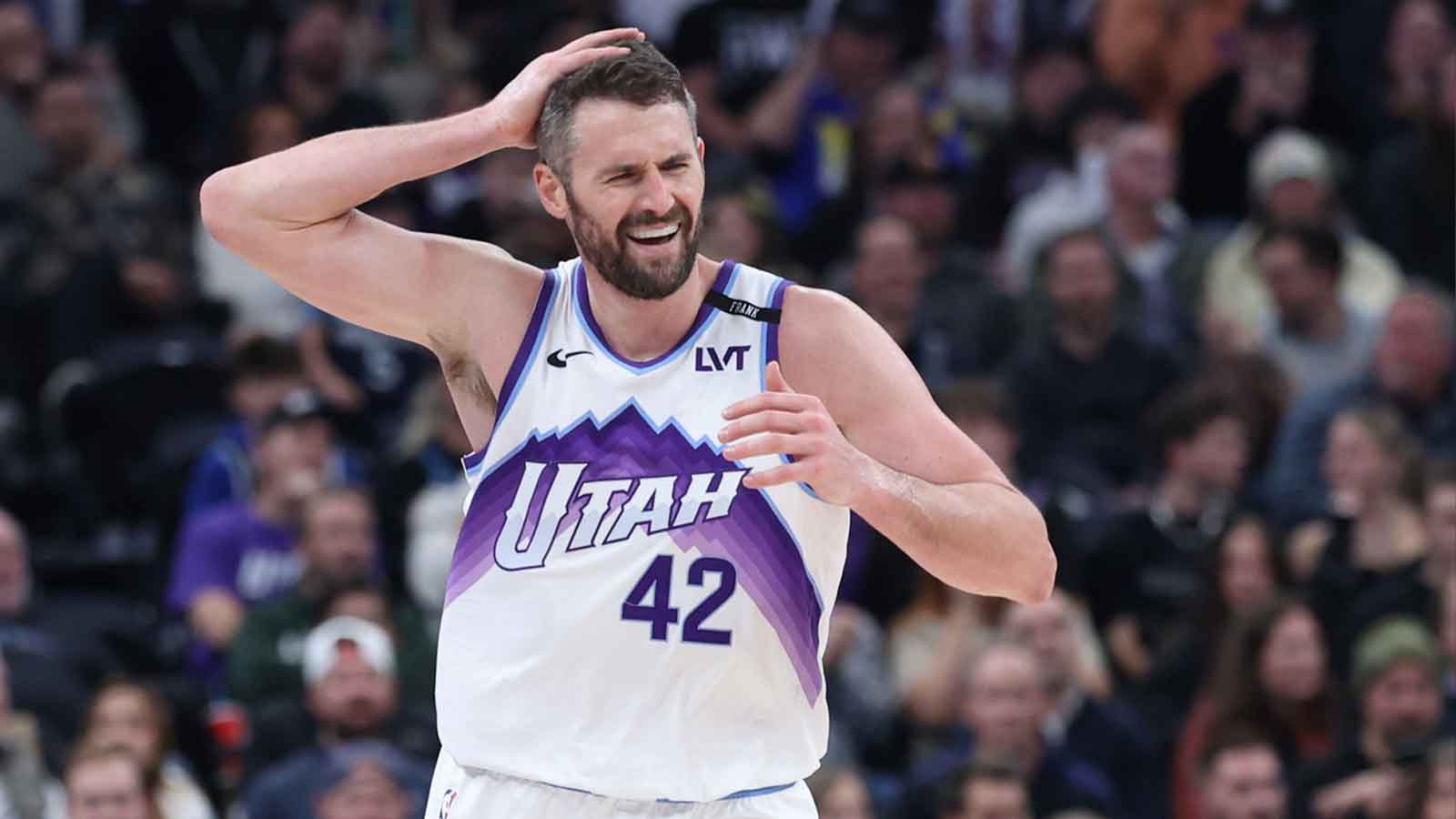
Joshua Valdez: You mentioned how you and DeMar DeRozan have related to each other about mental health struggles. Are there any other players or coaches who you’ve connected with about this?
Kevin Love: DeMar will always be the guy who opened the door. If he hadn’t spoken up first, I’m not sure I ever would have pressed send on my Players’ Tribune essay. Channing Frye is another close friend who has meant a lot to me. We were going to work together every day, and watching him talk openly about grief and depression showed me that you could be a pro and still be a whole human being.
A lot of the conversations that have meant the most never make the news. Guys pull you aside on the plane, in the weight room or after a tough loss and ask how you’re really doing. Coaches do it too. There’s no press release for that. That’s the part that feels different now. Ten years ago, a lot of those conversations were not happening out loud.
Joshua Valdez: Was it easier to perform on the court after publicly opening up about your struggles?
Kevin Love: Yes and no. It wasn’t like I opened up and suddenly played the best basketball of my life. It doesn’t work that way. What changed was the weight I was carrying. For a long time, so much of my self-worth was tied to basketball. Every bad game felt like proof that something was wrong with me as a person. Once I started doing the work like going to therapy, talking about it and getting to know myself better, I stopped needing the game to tell me I was okay.
That didn’t make me a better player overnight. But I do think it helped me become a healthier person and sustain myself through an 18-year career. It allowed me to enjoy the game again.
Joshua Valdez: Do you think that the NBA has adequate resources to help players with mental health struggles?
Kevin Love: The league has come a long way, and I don’t want to gloss over that. When I came into the NBA, mental health was not something we were talking about in locker rooms. Now there are real resources in place through the league, the Players Association and individual teams.
But having resources is only one part of it. Players also need to trust that they can use them confidentially and without being judged. You can have the best therapist in the world available, but if the culture still treats asking for help like a weakness, guys are not going to walk through that door.
That part takes longer to change, but we are making progress. And NBA players are at the top of the pyramid. By the time a guy reaches the league, he may have needed these tools for years and never had access to them. That is a big reason the Kevin Love Fund is so focused on reaching students and young athletes earlier.
Joshua Valdez: What’s your advice to players who want to open up, but are afraid they’ll get cut/traded if they do?
Kevin Love: First, I would say that fear is real. I’m not going to talk you out of that. This is a business, and I understand why a young player might worry about how it looks. But opening up does not mean that you have to write an essay and put it on the internet the way I did. That was my path. It does not have to be yours.
It can start with one private conversation with a therapist or one person you trust. You do not owe the world your story. You may never want to tell it publicly, and that is okay.
The important thing is not carrying all of it alone until it catches up with you. I tried that for almost 30 years. For me, the stronger move was finally asking for help.
Joshua Valdez: Can you share any specific stories about the Kevin Love Fund helping people?
Kevin Love: One story has stayed with me. A teacher shared that while she was teaching the Kevin Love Fund curriculum, one of her students wrote about having thoughts of self-harm. Because the curriculum created a space for that student to express what they were going through, the teacher was able to connect them with the school counselors and get them additional support. Recently, the student’s parents approached that teacher and thanked her for saving their child’s life.
That is difficult to hear without getting emotional. It’s also exactly why this work matters so much. Sometimes a young person is carrying something incredibly heavy but does not know how to say it out loud. If we can help create a safe opening for that conversation and give educators the tools to recognize when a student needs additional support, that can make a real difference.
When I was growing up, I didn’t have the vocabulary to explain what was happening internally. I buried it for a long time. The goal is to reach young people earlier and help them understand that they do not have to carry everything alone.
Joshua Valdez: Are you satisfied with the work you’ve done with the Fund so far? What are some goals you have with it moving forward?
Kevin Love: Proud, absolutely. Satisfied, no and I hope I never get there. We have reached hundreds of thousands of students and brought free mental-health curriculum into schools, youth programs and locker rooms. I’m proud that educators and coaches can access these tools without cost being a barrier.
But we’re nowhere close to done. Physical health is still prioritized over mental health in a lot of spaces. We want to create equity between the two and help young people understand that taking care of your mind is part of taking care of your whole self.
The goal I care about most is that this work outlives me. I want these tools to become part of how kids grow up, so that a young person going through what I went through has the language and support to ask for help a lot earlier than I did.
Joshua Valdez: Retired athletes often talk about the void that’s left after they’re done playing. How do you plan on filling that void once you retire, in order to keep your mental health in a good place?
Kevin Love: I’m not there yet. I still feel like I have more to give to the game. I would be lying if I said I have never thought about it though. The void is real. I have built so much of my life around basketball, and any time you step away from something that has been central to your identity for that long, there is going to be an adjustment.
The difference between me now and me ten years ago is that basketball is no longer my entire sense of worth. I have spent years building a life where I know I am more than the sport. That is not just a slogan. It is the work.
I have my family, and becoming a dad changes what a good day looks like. I have the Kevin Love Fund, which I have called my life’s work and truly mean it. Whenever that next chapter comes, I want to pour more of myself into the things that were always going to outlast the game.
The post Exclusive: Kevin Love lauds major advances in NBA’s mental health discussion, but a lot of work remains appeared first on ClutchPoints.

