The temptation after a statement 4-1 victory is always the same. Fans dream bigger, analysts raise ceilings, and narratives accelerate faster than the evidence allows. That is exactly where the United States finds itself after dismantling Paraguay in front of a euphoric home crowd. For long stretches, Mauricio Pochettino’s squad looked every bit like a team capable of making a deep run in the 2026 FIFA World Cup. Yet the leap from entertaining contender to world champion remains enormous. Tournament soccer has a way of exposing weaknesses hidden beneath dominant scorelines. Despite the fireworks in Los Angeles, the USMNT still carries structural concerns that make lifting the trophy a near-impossible outcome. The win over Paraguay was a major step forward. It just wasn’t proof that the Americans are ready to conquer the world.
Dream start
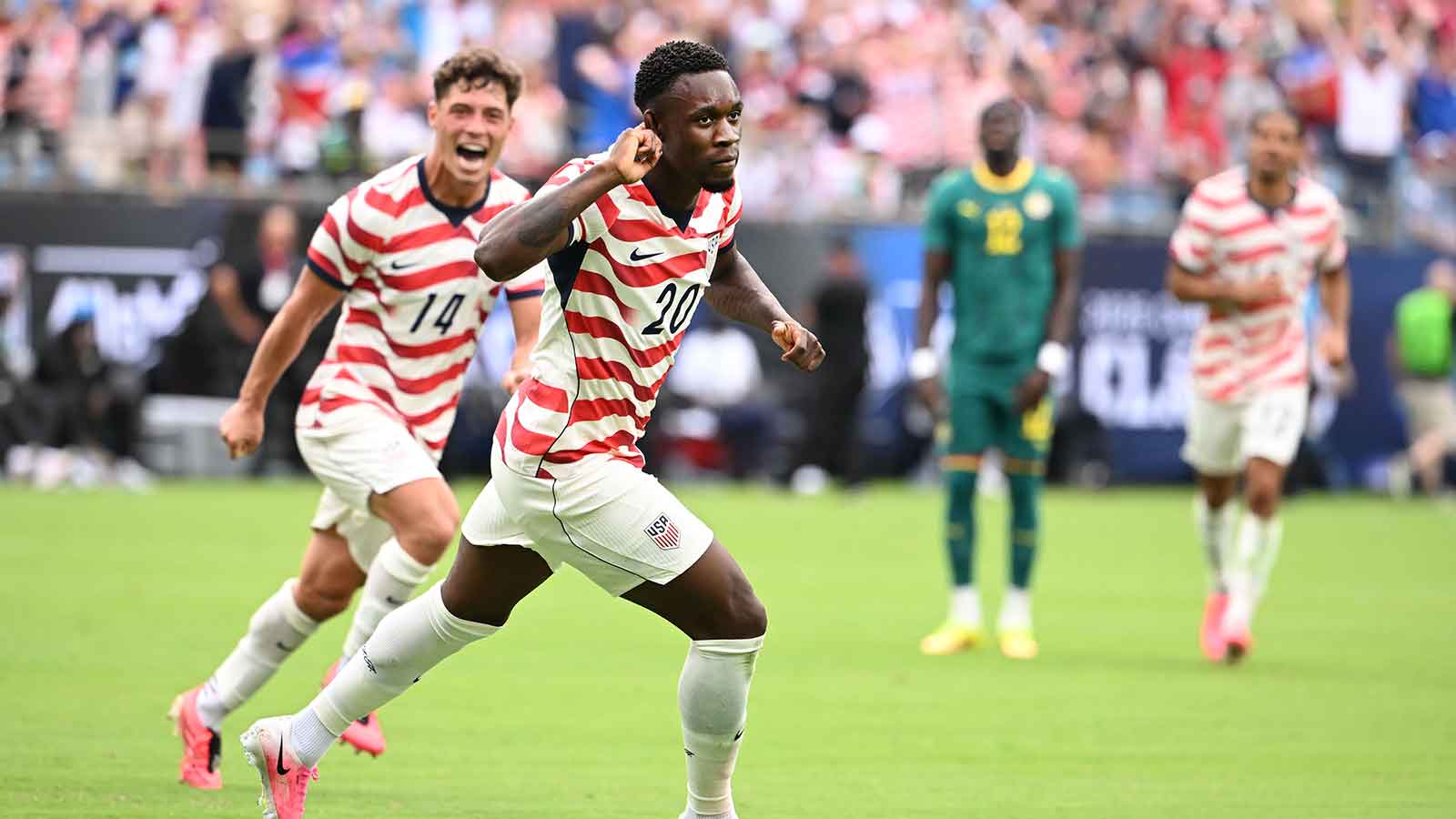
The match itself played out like a dream script for the co-hosts. They established complete control within the first seven minutes when an intense piece of playmaking forced an early own goal from Damián Bobadilla. The Americans completely dictated a relentless tempo that culminated in a historic display of offensive fluidity.
Folarin Balogun took center stage, demonstrating the lethal instincts of a true international striker. Every American attack seemed purposeful. Every passing sequence carried danger. Paraguay struggled to establish any meaningful foothold in the contest.
The second half inevitably brought a slight reduction in intensity. Paraguay eventually found a response through Maurício in the 72nd minute. Yet even that moment failed to derail the American momentum. Deep into stoppage time, Giovanni Reyna added the finishing touch with a beautifully curled strike into the bottom corner.
By any measure, it was one of the most explosive attacking performances the USMNT has ever produced on this stage. However, treating that as a reliable indicator of ultimate tournament success would be a premature and dangerous mistake.
The illusion
The first reason for caution lies in the quality of the opposition and the circumstances surrounding the performance. Yes, the Americans absolutely looked fluid and unstoppable going forward. Yet, they benefited from facing a Paraguay side that never recovered from the early setback. From the opening whistle onward, La Albirroja appeared disorganized, reactive, and unable to establish defensive compactness. The spaces available to Christian Pulisic, Balogun, and Reyna simply will not exist later in the tournament.
FIFA World Cup champions are crowned because they solve elite defenses. The teams standing between the USMNT and a trophy will be more tactically sophisticated and exceptionally disciplined. They will not leave acres of space between midfield and defense. They will not allow attackers to run freely into dangerous channels.
Paraguay’s collapse created ideal conditions for the American attack to flourish. That should be celebrated. What it should not do is convince observers that breaking down France, Argentina, Brazil, Spain, Germany, Croatia, Netherlands, Japan or England will be equally straightforward.
The true test remains unanswered. Can the United States unlock a disciplined low block when every passing lane is contested? Until that question is answered, championship projections remain premature.
Fragile reality
Perhaps the most revealing moment of the evening occurred not on the field, but during halftime. When Christian Pulisic remained in the locker room due to a tight calf muscle, the entire complexion of the American attack changed. The substitution was understandably precautionary. However, it also exposed a vulnerability that cannot be ignored.
During the first half, Pulisic had been the primary catalyst behind the United States’ attacking dominance. His ability to receive the ball in dangerous areas created opportunities for teammates. His mere presence altered Paraguay’s defensive shape. Without him, the American attack became noticeably less dynamic. Possession remained strong, but the same level of penetration and unpredictability largely disappeared.
That reality highlights a significant concern. Elite national teams can survive the absence of a star player because their systems remain functional regardless of personnel. The United States, however, still appears heavily dependent on Pulisic’s unique abilities.
Over the course of a seven-match tournament, injuries are inevitable. Fatigue accumulates. Knockout matches become increasingly physical. If the Americans are forced to navigate critical stages without their talisman, their attacking ceiling drops considerably. That is just not the profile of a FIFA World Cup champion.
Structural defensive lapses
For all the praise deservedly directed toward the attack, the defensive performance contained red flags. Paraguay’s goal in the 72nd minute emerged from a broader issue: lapses in concentration and positional discipline.
On the play, multiple defenders were drawn toward the ball simultaneously, leaving dangerous space exposed behind them. Against Paraguay, the damage was limited to a single goal. Against the world’s elite attackers, similar mistakes often decide tournaments.
The difference between winning a group-stage match and winning the FIFA World Cup is ruthlessness. Teams like Argentina, France, Spain, and Brazil punish even the smallest defensive errors. One mistimed rotation, missed assignment, or lapse in awareness is often all it takes. Pochettino has unquestionably improved the team’s organization and defensive structure. Yet, the habits that emerge under pressure still require refinement.
Long and unforgiving road

History offers an important reminder: dominant opening victories rarely guarantee ultimate glory. The expanded FIFA World Cup format creates an even more demanding path to the trophy. Teams must navigate multiple tactical styles, overcome injuries, and manage emotional swings. Theymust consistently perform under mounting pressure. Momentum can disappear in an instant.
The United States deserves immense credit for its opening performance. Balogun looked clinical. Reyna appeared sharp. Pulisic once again demonstrated why he remains the face of American soccer. The result provided exactly the start tournament organizers and supporters had hoped for.
That said, winning the FIFA World Cup requires more than talent and momentum. It demands elite squad depth, defensive consistency, and the ability to solve problems against opponents operating at the highest level of the sport.
The USMNT has unquestionably proven it can be dangerous and entertaining. What it has not yet proven is that it can survive the relentless gauntlet required to become world champions.
Enjoy the goals. Celebrate the statement victory. Appreciate the progress. For now, though, keep the expectations grounded. Because despite the dominant win over Paraguay, the hardest part of the journey has not even begun.
The post Why USMNT can’t go all the way after dominant win over Paraguay appeared first on ClutchPoints.

