Profile
Position: Point guard
Height: Six-foot-two
Weight: 185 pounds
Comparisons: Elfrid Payton, Earl Watson, Collin Sexton, Reggie Jackson, Jeremiah Fears
Raptors Comparisons: Rafer Alston, T.J. Ford
Strengths
Rim-pressure
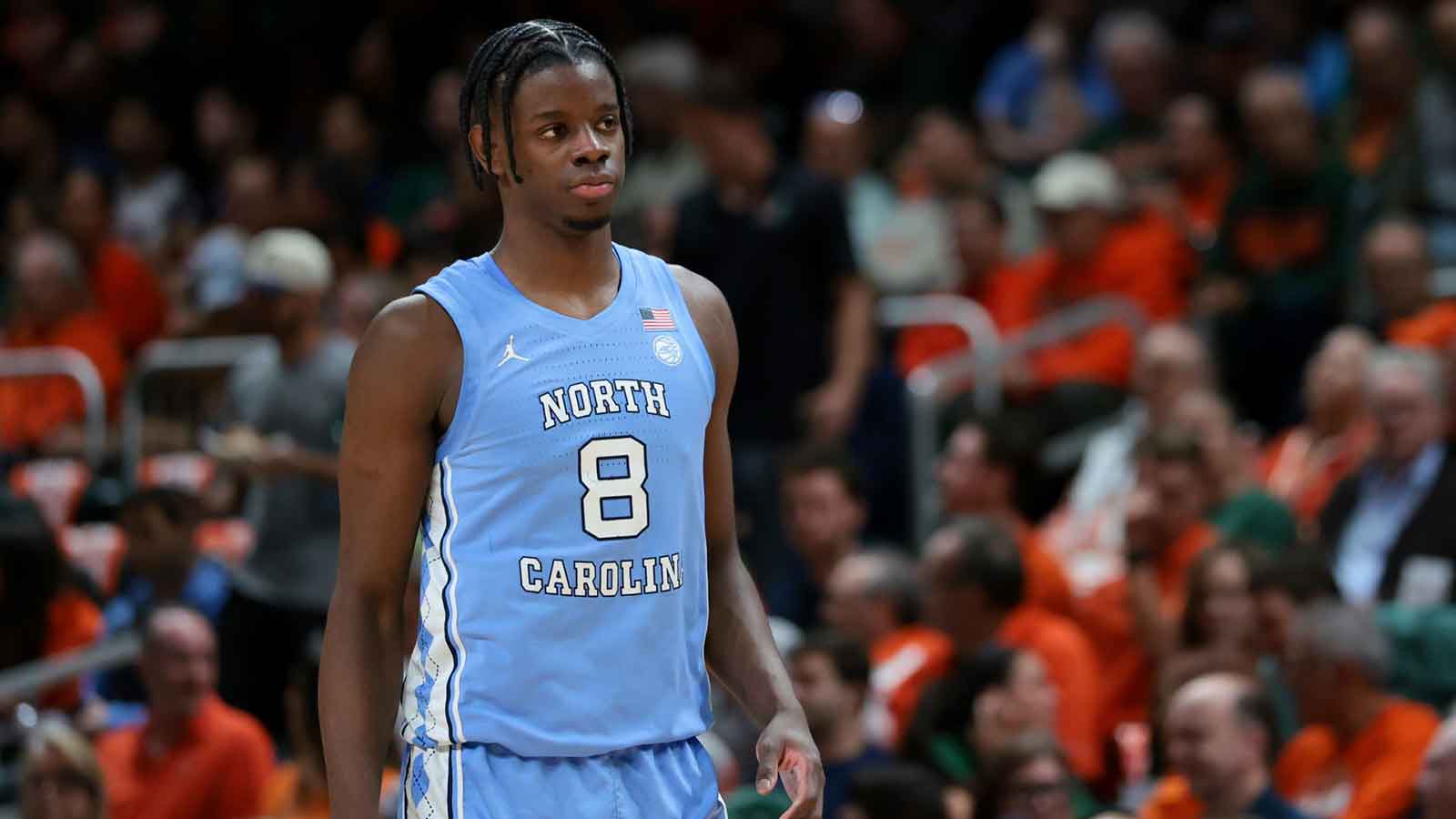
Ebuka Okorie’s elite trait is his ability to get to the basket at will. Ranking in the 99th percentile per 100 possessions for attempts at the rim, Okorie understands how to deploy his game-breaking first step and jitterbug agility to get by perimeter defenders. While he graded out better as an isolation scorer, Okorie was also solid in pick-and-roll actions.
His relentless play style naturally resulted in an elite free-throw rate. Okorie finished with a nation-leading 226 free throws – 7.3 per game – and converted on an impressive 83.2 per cent of his attempts.
Self-Creation
Despite Stanford’s lack of top-end talent, Okorie still averaged 23.2 points and 3.6 assists on 46.5 per cent shooting. Opposing teams resorted to shading-type coverages that often were used to slow down offensive threats like Brandon Ingram, Shai Gilgeous-Alexander and Anthony Edwards in the NBA playoffs. Yet Okorie still thrived with the ball in his hands and averaged nearly 31 per cent of Stanford’s points.
While Okorie could stand to improve in certain spots on the floor, he’s still a legitimate three-level scorer. Okorie isn’t an above-the-rim type of athlete, but he can seemingly shift into an unlimited number of gears with the ball in his hands.
Areas for Improvement
Rim efficiency
Okorie may be the best – or most consistent – at applying downhill pressure, but the freshman isn’t necessarily the most effective when he gets into the paint. While nearly 90 per cent of his rim-attempts are unassisted, Okorie converted on roughly 55 per cent of those dribble-drives. That ranks him as an average finisher among NCAA players.
Against the California Golden Bears on Jan. 24, Okorie was held to 1-of-16 from the field, with nearly half of his shots coming at the rim. Fortunately for Okorie, his knack for getting to the basket still resulted in 14 free throws. If Okorie sees even a slight uptick in efficiency, that might be the swing factor that catapults him into a draft-day steal at 19.
Defensive Ceiling
Like some of the other scoring guards available in this part of the draft, Okorie has question marks surrounding his defence. If it weren’t for this potential red flag, his intriguing offensive profile would have been enough to lock him into the lottery. Like with Christian Anderson, opposing lead guards will hunt Okorie down with a laser focus. A silver lining to not having Immanuel Quickley push his luck with his injury during the playoffs, was not having to worry about the Cleveland Cavaliers attacking him on switches. With Jamal Shead, the Raptors mostly switched without concern. Drafting Okorie at 19 would complicate that luxury.
Okorie did convert some of his doubters when he measured with a 6’7.75” wingspan at the NBA Draft Combine. How quickly and consistently Okorie can adapt to the league’s physicality will determine his overall ceiling.
Potential fits with Toronto
Microwave scorer off the bench
The Raptors averaged 33.5 bench points per game, which ranked 24th in the league. That needs to improve, particularly on a roster that includes Brandon Ingram and Quickley’s injury concerns. Ingram had a bounce-back season from a health perspective, but another lower-body injury hampered the Raptors’ chances at getting past the first round of the post-season. Quickley has missed 60 regular-season games (and all seven playoff games this past year) since being acquired by the Raptors. Okorie represents offensive insurance should the team run into bad injury-luck again this season.
With the Raptors at full-strength, Okorie becomes a fascinating member of a bench unit that exceeded expectations in the playoffs. Even though it pushes Ja’Kobe Walter to the three spot, an Okorie and Shead backcourt off the bench is a fun dynamic.