Star player A.J. Brown has already made a strong impression in New England, and the feeling seems mutual. After only a short time working with Drake Maye, the new Patriots wide receiver praised the young quarterback’s arm talent, command of the offense, and leadership. Brown’s arrival provides New England with a true No. 1 target, but it also complicates the roster situation. With more proven options in the receiving corps, several players who once appeared secure now have much more to prove before final cuts.
The New England Patriots are finally facing a better kind of problem. For years, the receiver room felt thin, incomplete, or too dependent on potential, but now, after adding premium talent and reshaping the offense around a young quarterback, the depth chart is crowded enough that some useful players may not survive the summer.
This is how competitive rosters are built, and it also leads to tough decisions.
Mandatory minicamp did not determine the final 53-man roster, and it would be unwise to treat June practices as definitive evidence. With no pads, no preseason snaps, and no real game-plan pressure, every evaluation must be viewed carefully. However, minicamp can clarify how the coaching staff views roles, where players are lining up, and which competitions may become more difficult once training camp begins. For them, the danger zone lies at the back of the receiver group.
The top of the room appears more defined than it did earlier in the offseason, but Brown alters the entire hierarchy. Romeo Doubs provides the Patriots with another experienced outside option, and Mack Hollins has the size, blocking ability, and special teams value that coaches often trust. DeMario Douglas offers a different body type and slot skill set. This leaves several wide receivers competing for fewer flexible spots than they might have anticipated just a few months ago.
Two players stand out as the most vulnerable after minicamp, and not because they lack NFL talent, but because their paths to a weekly role have become much narrower.
Kayshon Boutte, WR
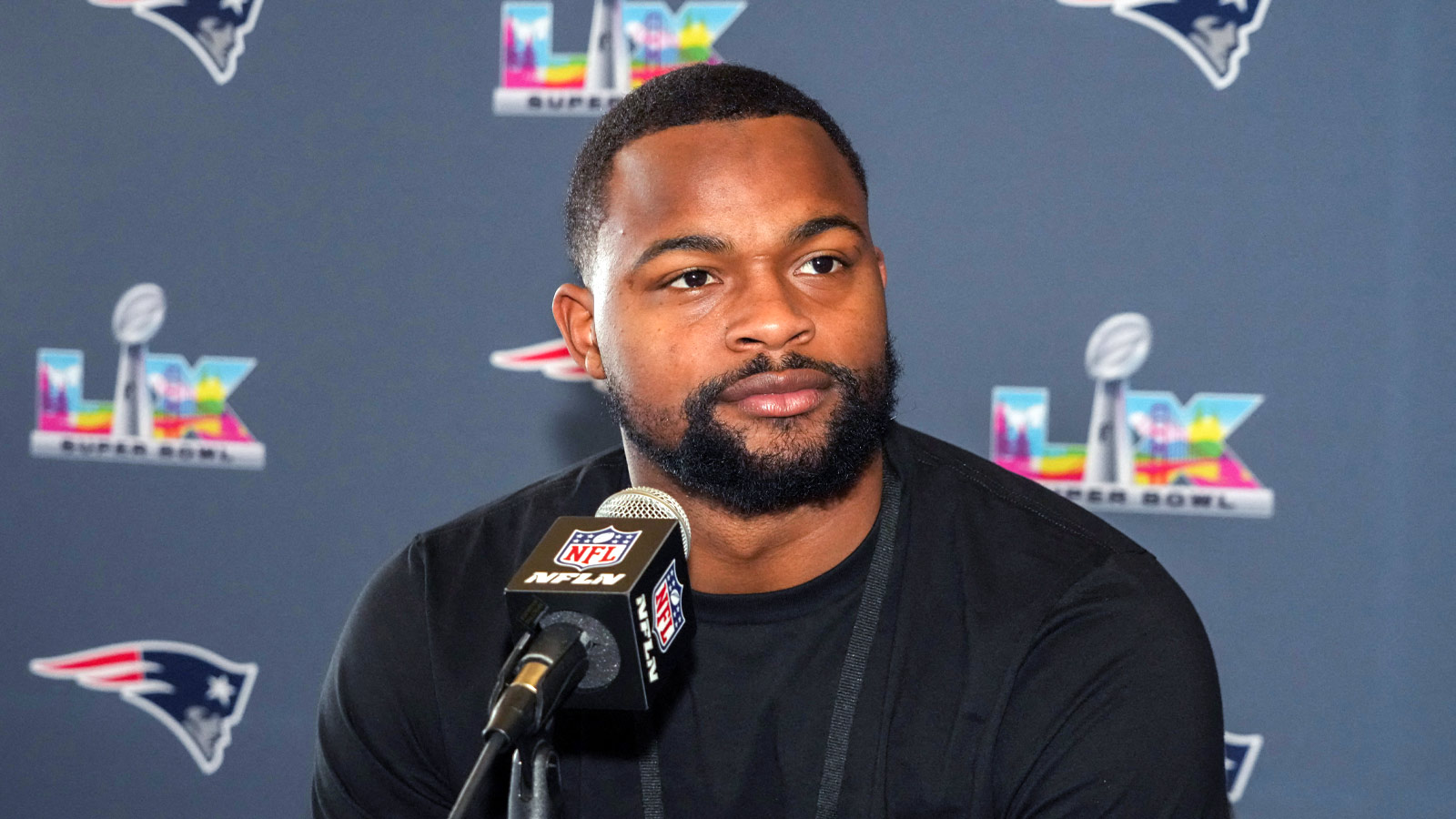
There is a reasonable argument for New England to keep him. He has already demonstrated he can produce in this offense; he is still young, and he has built enough trust to avoid being seen as just another back-end roster body.
That is significant, of course, and teams do not typically move on from receivers who have shown flashes of talent in real games, especially when they are on manageable contracts, but roster construction is not just about talent, as it also involves fit, role, timing, and numbers.
Boutte entered minicamp in a strange position. Trade speculation had followed him, and his absence from voluntary workouts made his return to mandatory sessions noteworthy. Once he returned, the bigger question became whether he still had a clear role in this version of the offense.
This is where things get tricky. Boutte can play, but what specific role does he truly own? That is the question that could follow him throughout the summer.
If New England keeps six receivers, Kayshon Boutte’s chances of making the roster improve significantly, but if the team decides to keep only five receivers, or if special teams value becomes the primary consideration, his situation becomes more precarious. A player can be one of the best pure receivers among those competing for a spot and still lose out if the coaching staff prioritizes versatility in other positions.
There is also the contract aspect to consider. A player entering the final year of their rookie contract may become a trade candidate if the team believes it won’t re-sign him. While this doesn’t guarantee a trade, it does mean that the Patriots might have to weigh whether keeping him as a depth piece is more valuable than exploring a deal before the season starts. It’s a tough calculation, but that’s the reality of the NFL, as sentiment is often cast aside when roster decisions are at play.
The good news for Boutte is that he has already made a case through his on-field performance, but the downside is that New England has upgraded their receiving corps. His challenge is not about being incapable but rather about finding himself in a position where he is seen as useful but not essential.
Kyle Williams, WR
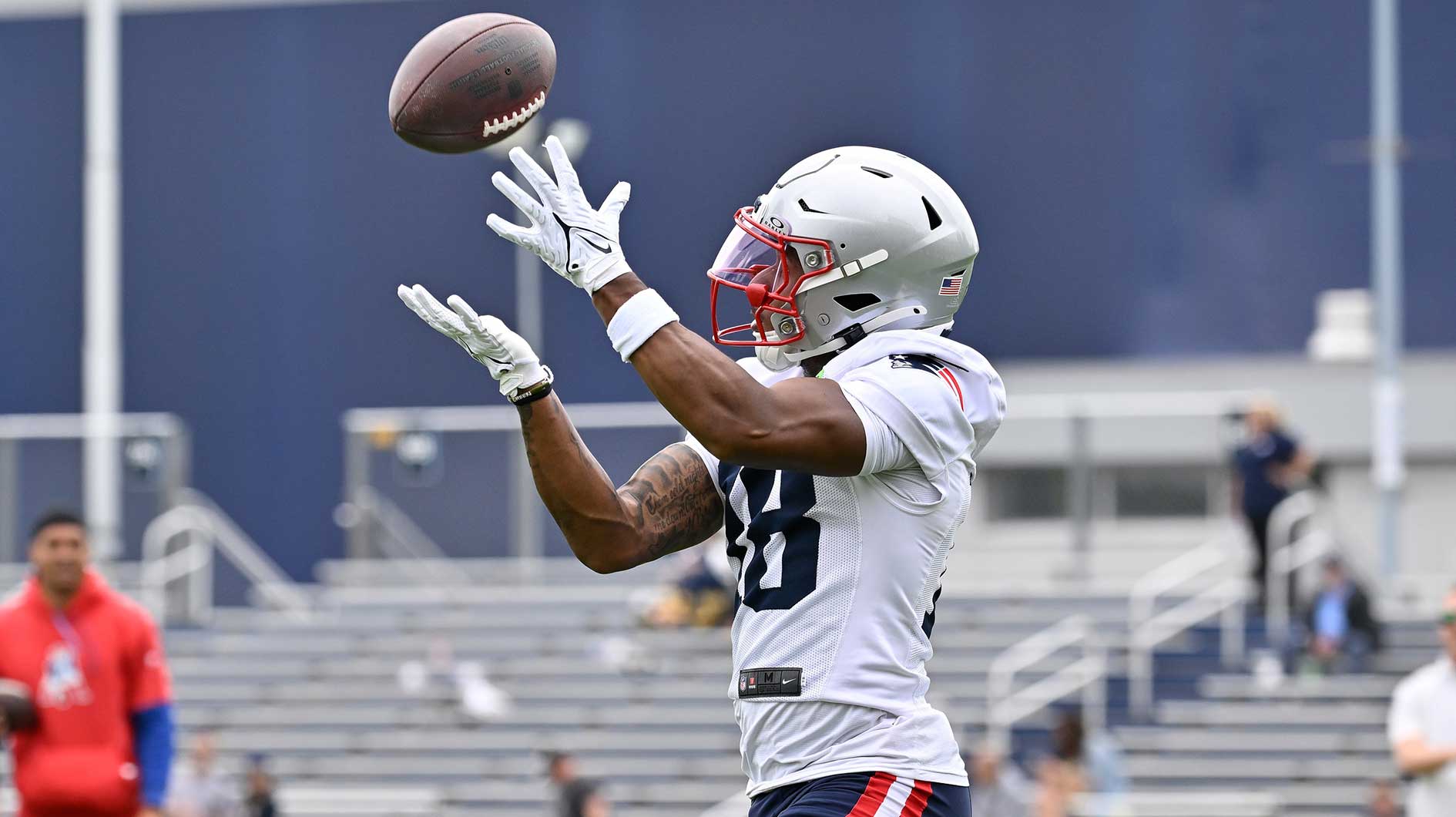
The Patriots drafted Williams because speed is a valuable asset. This is easy to understand, as every offense needs a player who can stretch the field, threaten defensive backs vertically, and create space for established receivers underneath. In theory, Williams is an ideal candidate as a developmental deep threat in an offense that has enough structure to help him grow.
But theory alone won’t secure a roster spot. Young receivers often need time to adjust to NFL coverage, refine their route running, grasp timing, adapt to physicality, and learn the mental demands of a professional playbook. A few inconsistent practices should not be detrimental to a player’s chances. Still, when a receiver’s best argument for a roster spot is explosive potential, the flashes of brilliance must occur frequently enough to outweigh any mistakes. Training camp will be crucial for him.
He doesn’t need to outperform the top receivers because his objective is to prove that he provides the Patriots with something irreplaceable. If he emerges as the best vertical threat on the roster, his case will become stronger. Additionally, if he can contribute in special teams, such as returning kicks or covering punts, his chances of making the team improve significantly.
Without those contributions, the margin of error shrinks rapidly.
At the back of the roster, coaches prefer players who can be activated on game days without uncertainty about their roles. A fifth or sixth receiver typically needs to contribute in multiple areas or offer a standout quality that justifies their presence despite any growing pains.
So, his best-case scenario is that he consistently produces explosive plays in camp, establishes himself as the primary deep threat, and provides a strong reason to continue his development. On the flip side, his worst-case scenario is just as obvious: he only flashes talent occasionally, makes frustrating mistakes, and falls behind more trusted options.
Following the minicamp, both of their situations remain uncomfortable, and if the Patriots decide to keep six wide receivers, both players may make the cut, but if roster constraints force them to reduce the number of players at that position, one of them could be at risk. So, if another young player excels on special teams, the competition for the final roster spot could become even more intense. This is what makes this summer noteworthy for them all.
Boutte and Williams are talented enough to earn their spots, but they are also vulnerable enough to worry about their futures. In a deeper and more competitive Patriots offense, this is exactly how the back end of the roster should look.
The post 2 Patriots in danger of getting cut after 2026 minicamp appeared first on ClutchPoints.